Sitting Habits: How They Shape Your Back Health Tomorrow
Most back problems do not begin with a sudden injury or a single uncomfortable day at your desk. They develop gradually, shaped by hours of sustained sitting that subtly influence how the spine absorbs load and how surrounding muscles respond to prolonged stillness. Over time, these repeated exposures can change how well the spine tolerates everyday demands—often long before pain becomes noticeable.
Whether you spend your day working at a computer, commuting, or unwinding in front of a screen, sitting is one of the most frequent physical positions your body experiences. The way your body is supported during these hours plays a meaningful role in long-term spine health. Even in the absence of discomfort, unsupported or inefficient sitting mechanics can quietly contribute to cumulative strain.
This article explores how daily sitting habits influence future back health and outlines practical, evidence-informed prevention strategies. Rather than focusing on short-term fixes like posture reminders or isolated stretching routines, we’ll examine approaches that reduce mechanical strain at its source—helping protect spinal health over the long term

The Hidden Cost of Daily Sitting (Even When Nothing Hurts)
It’s common to assume that if sitting doesn’t cause immediate discomfort, it isn’t doing any harm. In reality, the absence of pain does not necessarily indicate the absence of strain. Prolonged static sitting has been consistently associated with increased musculoskeletal load and a higher risk of developing back and neck discomfort over time. Research shows that extended sedentary behavior—particularly when sitting is uninterrupted by regular movement—is linked to greater reports of spinal and neck-related issues. Prolonged sitting can also increase the risk of vascular issues such as varicose veins and deep vein thrombosis.
Studies have found that individuals who spend most of their workday seated, especially without sufficient breaks, face a higher risk of poor general health outcomes and back or neck pain compared to those with less sedentary routines. These effects often develop gradually, making them easy to overlook in the early stages.
So why does sitting have this impact, even when it feels relatively comfortable?
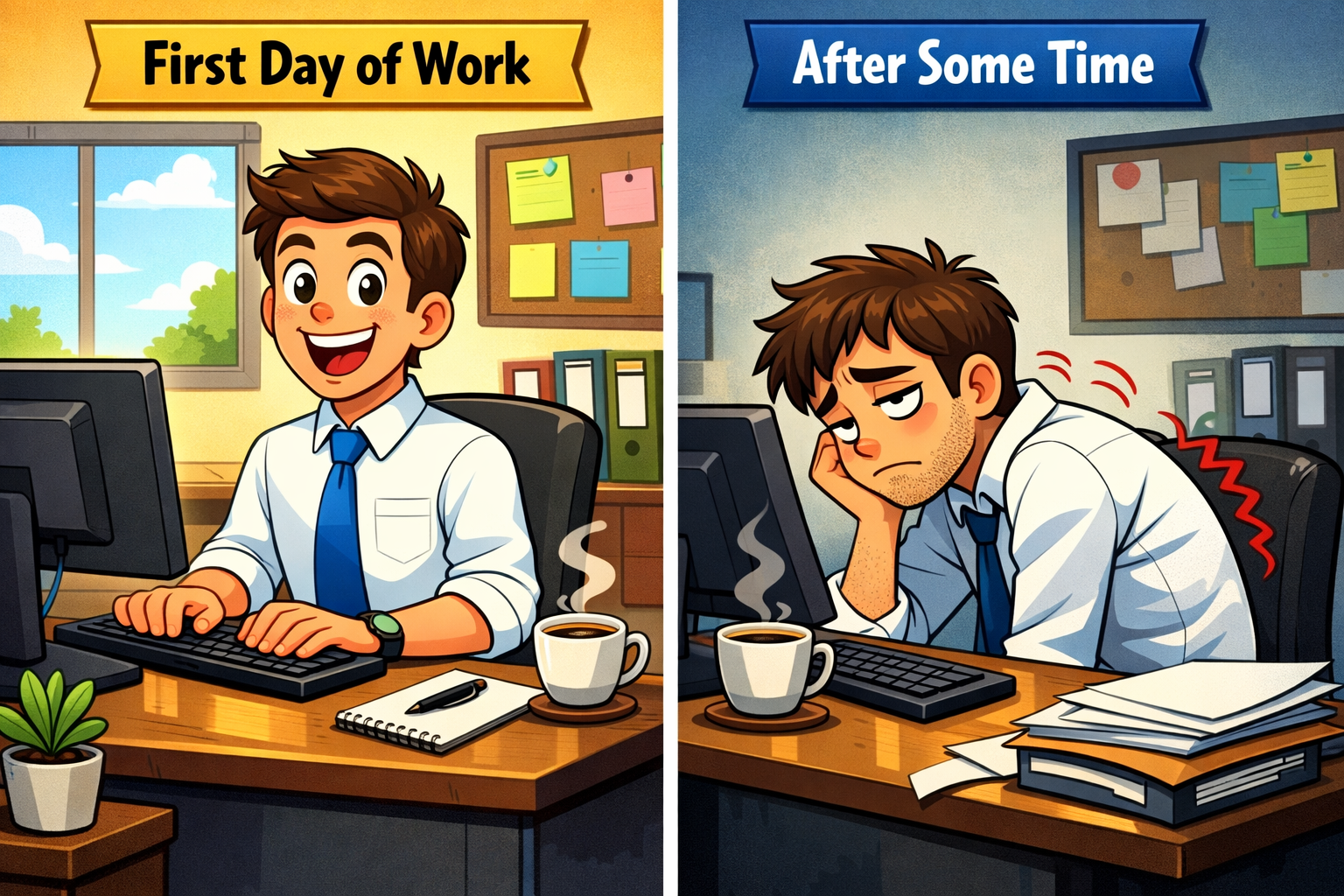
Static sitting places sustained load on the spine while requiring low-level, continuous muscle activation to maintain an upright position. Muscles designed for movement and short-term support are instead asked to work for hours at a time. Meanwhile, spinal structures experience ongoing compression without the natural relief that movement provides. Over weeks, months, and years, this repeated low-level strain can reduce your sitting tolerance—the amount of time your body can remain seated before fatigue, stiffness, or discomfort begins to appear.
What makes this process particularly challenging is its subtlety. The strain accumulates quietly, often long before symptoms demand attention. Reduced movement and poor posture can also negatively impact energy levels throughout the day. Understanding this hidden cost of daily sitting is a critical step toward protecting long-term spine health.

How Much Do People Actually Sit — and What Does It Mean?
For many adults, sitting occupies a larger portion of the day than any other physical position. Between desk work, commuting, and leisure activities, seated time accumulates quickly—often without much awareness. Global research suggests that adults spend an average of approximately 4.7 to 6.5 hours per day sitting, with trends indicating that this figure continues to rise as work and daily life become increasingly screen-based.
This matters because the effects of sitting are not linear. As total sitting time increases, so does the likelihood that the spine and supporting tissues are exposed to sustained mechanical load without adequate variation or relief. Sitting for long periods without breaks can significantly increase health risks.
The relationship between daily sitting time and musculoskeletal risk can be broadly summarized as follows:
| Time Spent Sitting Daily | Potential Impact on Back Health |
|---|---|
| 0–3 hours | Lower overall risk of musculoskeletal strain |
| 4–6 hours | Moderate risk; stiffness and discomfort may develop over time |
| 6+ hours |
Higher risk of back and neck pain; some studies report up to an 88% increased likelihood of back or neck pain compared to minimal sitting durations |
Importantly, regular exercise—while essential for overall health—does not fully counteract the effects of prolonged sitting. Research indicates that even physically active individuals may still experience elevated health and musculoskeletal risks if large portions of the day are spent seated without sufficient support or movement.
This highlights a critical distinction: physical activity supports recovery and resilience, but it does not eliminate the mechanical demands placed on the spine during long periods of sitting. Addressing how—and how long—we sit remains an essential component of protecting long-term back health. Incorporating regular breaks to walk or stand can help reduce the negative effects of prolonged sitting.

How Today’s Sitting Mechanics Shape Tomorrow’s Back Health
When it comes to long-term back health, the question isn’t simply how many hours you spend sitting—it’s how your body is supported during those hours. Sitting mechanics determine how forces move through the spine and how much work surrounding muscles must perform to keep you upright. Maintaining balance between different body parts, including proper alignment of the head over the shoulders and spine, and positioning of the legs, is crucial for reducing strain and promoting healthy posture.
Poor sitting mechanics gradually alter several key factors:
- Spinal curvature, particularly in the lumbar region
- Muscle engagement, increasing the need for continuous low-level bracing
- Pressure distribution, concentrating load into fewer areas of the spine
Over time, these patterns reinforce themselves. The body adapts to what it experiences repeatedly, even when those conditions are less than ideal. A helpful way to think about this is mechanical fatigue: when the same structures are stressed in the same way day after day, their ability to tolerate load diminishes. Much like bending a paperclip at the same point over and over, efficiency decreases long before visible failure occurs.
In practical terms, unsupported sitting tends to produce a predictable chain of effects. Muscles that should assist intermittently are required to remain active continuously, leading to fatigue. As those muscles tire, more load shifts to passive spinal structures such as the vertebrae and intervertebral discs. At the same time, spinal alignment drifts further away from neutral, increasing compression and shear forces where the spine is least equipped to manage them. Good posture aims to keep the body in a position that places the least amount of stress on muscles and joints by distributing weight evenly, which helps support the spine, head, and legs.
Compared to a well-supported sitting position, this creates a less efficient system overall—one that demands more effort for the same task. When repeated daily, that loss of efficiency compounds, gradually shaping how your back responds to sitting in the future.

Early Signs Your Sitting Setup May Be Shaping Unwanted Outcomes
One of the challenges with sitting-related back issues is that they rarely announce themselves clearly in the early stages. You don’t need to be in pain to recognize that your body is responding to how you sit. Subtle changes in comfort and movement patterns often appear first, serving as early indicators that your sitting environment may not be providing adequate support.
Common early signals include:
- Stiffness or tightness after extended periods of sitting
- Frequent shifting or repositioning in an effort to stay comfortable
- Noticeable relief when standing up, walking, or changing positions
- Mild, persistent tension around the lower back, hips, or pelvis
These experiences are often dismissed as normal side effects of a long workday. In reality, they can reflect the body adapting to repeated mechanical demands. When a sitting setup lacks proper support, muscles compensate to maintain stability, and joints absorb forces they aren’t designed to handle continuously.
Over time, these compensation patterns can become habitual, increasing the likelihood of cumulative strain. Paying attention to these early signals offers an opportunity to intervene before discomfort becomes persistent or limits daily activity.

Why Posture Reminders and Stretching Aren’t Enough
When stiffness or discomfort appears during the workday, many people instinctively respond by trying to “sit up straight” or by adding more stretching to their routine. These strategies are common—and well intentioned—but on their own, they rarely provide lasting relief or meaningful protection for long-term back health.
Posture reminders rely on sustained muscular effort. Holding an upright position through conscious correction requires continuous activation of the muscles that support the spine. Over short periods, this can feel helpful. Over hours, however, it often leads to increased fatigue, as muscles are asked to remain engaged far longer than they are designed to.
Stretching plays a valuable role in maintaining mobility and supporting recovery, particularly after long periods of sitting. What stretching cannot do, however, is reduce the mechanical demand placed on the body during sitting itself. Once the stretch ends, the same forces return if the underlying sitting conditions remain unchanged.
In many cases, ongoing strain persists because the body is compensating for missing structural support. Muscles work harder to stabilize the spine, effort replaces efficiency, and the primary source of load is never addressed. As a result, discomfort may temporarily improve but continues to resurface.
Reducing strain at its source requires a different approach. Support—rather than constant effort—allows the body to maintain neutral alignment with less muscular demand. When support is present, the spine no longer relies on vigilance to stay upright, and sitting becomes significantly less taxing over time.

Creating a Healthy Workspace for Your Back
Designing a workspace that supports your back is one of the most effective ways to counteract the risks associated with prolonged sitting. Whether you’re working from home or in an office, the way you set up your environment can make a significant difference in preventing neck pain, back pain, and other health problems that develop from sitting for long periods.
A healthy workspace starts with good sitting posture. This means keeping your feet flat on the floor, your knees at or just below hip level, and your back straight with reliable lumbar support. Maintaining this correct posture helps reduce muscle tension and the negative effects of poor posture, which can otherwise lead to discomfort and long-term issues.
Research suggests that investing in an ergonomic chair with proper lumbar support, and positioning your computer screen at eye level, can greatly decrease your risk of developing a stiff neck, neck pain, and back pain. It’s also important to pay attention to your computer keyboard and mouse placement—keeping them within easy reach helps prevent unnecessary strain on your shoulders, arms, and wrists.

The Most Effective Way to Protect Your Back While Sitting
Protecting your back during long hours of sitting is less about achieving a perfect posture and more about managing the forces your body is exposed to throughout the day. Long-term spine health depends on reducing cumulative load—something that can only be accomplished through consistent, well-designed support rather than constant self-correction.
Effective sitting support is built around a few core principles. First, it promotes neutral alignment that the body can maintain passively, without requiring ongoing muscular effort. Second, it encourages even pressure distribution across the hips and back, preventing load from concentrating in a single area of the spine. Finally, it provides stability, often through a combination of seat support, lumbar support, and proper foot positioning, so the body doesn’t have to work continuously to stay balanced.
When these elements work together, several important changes occur. Muscles no longer need to compensate for missing structure, spinal loads are distributed more efficiently, and overall comfort improves—even during extended periods of sitting. Rather than feeling progressively more demanding as the day goes on, sitting begins to feel more neutral and sustainable.
One way to achieve this level of consistent support is through a structured ergonomic system, such as the Serenform Posture Support Bundle. Designed to work as an integrated solution, it supports the body’s natural alignment and reduces unnecessary strain, helping create a sitting environment that protects your back not just for today, but over the long term.

How Ergonomic Support Changes Your Long-Term Trajectory
The most important benefit of ergonomic support is not an immediate sense of comfort—though that often comes with it. The real value lies in how small, consistent reductions in daily spinal load accumulate over time. When strain is lowered day after day, the effects compound in ways that meaningfully influence long-term back health.
Thoughtful ergonomic support changes what your body experiences during the many hours you spend sitting. With proper support in place, muscles are less likely to fatigue because they are no longer required to brace continuously. Spinal alignment remains closer to neutral with less effort, and daily mechanical stress does not accumulate at the same rate. These changes may feel subtle in the moment, but their impact becomes clearer over months and years.
This is the distinction between short-term comfort and long-term protection. Unsupported sitting tends to increase compensatory muscle activity and concentrate load on passive spinal structures. Supported sitting, by contrast, reduces the need for compensation and allows the body to maintain more sustainable postures with less effort.
Over time, this difference shapes how the body adapts to sitting. Instead of gradually lowering tolerance and increasing fatigue, supportive sitting environments help preserve capacity and resilience. That shift in trajectory is what allows many people to feel better not just temporarily, but consistently—well into the future.

Sitting Today Is an Investment in Tomorrow’s Back Health
Long-term back health is not determined by a single workout, a brief stretch, or an occasional posture adjustment. It is shaped by what your body experiences most consistently throughout the day. For many people, that means hours of sitting—day after day, year after year.
When daily sitting is supported effectively, important changes occur beneath the surface. Muscles are no longer required to brace constantly to maintain stability, spinal load is distributed more evenly across supportive structures, and early discomfort signals are less likely to build into persistent issues. Over time, these conditions help preserve the body’s ability to tolerate sitting without increasing strain. Workplace ergonomics play a crucial role in preventing back problems by ensuring that office furniture and workspace setups promote good posture and reduce discomfort for those who sit for extended periods.
Perhaps most importantly, these outcomes are not dependent on perfect habits or constant attention. With the right support in place, your environment works with your body rather than asking it to compensate. This shift reduces cumulative stress and supports healthier aging of the spine.
The encouraging reality is that it’s never too late to improve how you sit or to influence how your back responds in the years ahead. Taking a preventive approach—one that addresses daily mechanical demands rather than reacting to pain after it appears—can make a meaningful difference.
If you’re ready to take a practical, everyday step toward protecting your back, the Serenform Posture Support Bundle offers a thoughtfully designed system that supports neutral alignment and reduces strain without requiring ongoing effort. It’s a simple way to invest in back health now, with benefits that extend well into the future.