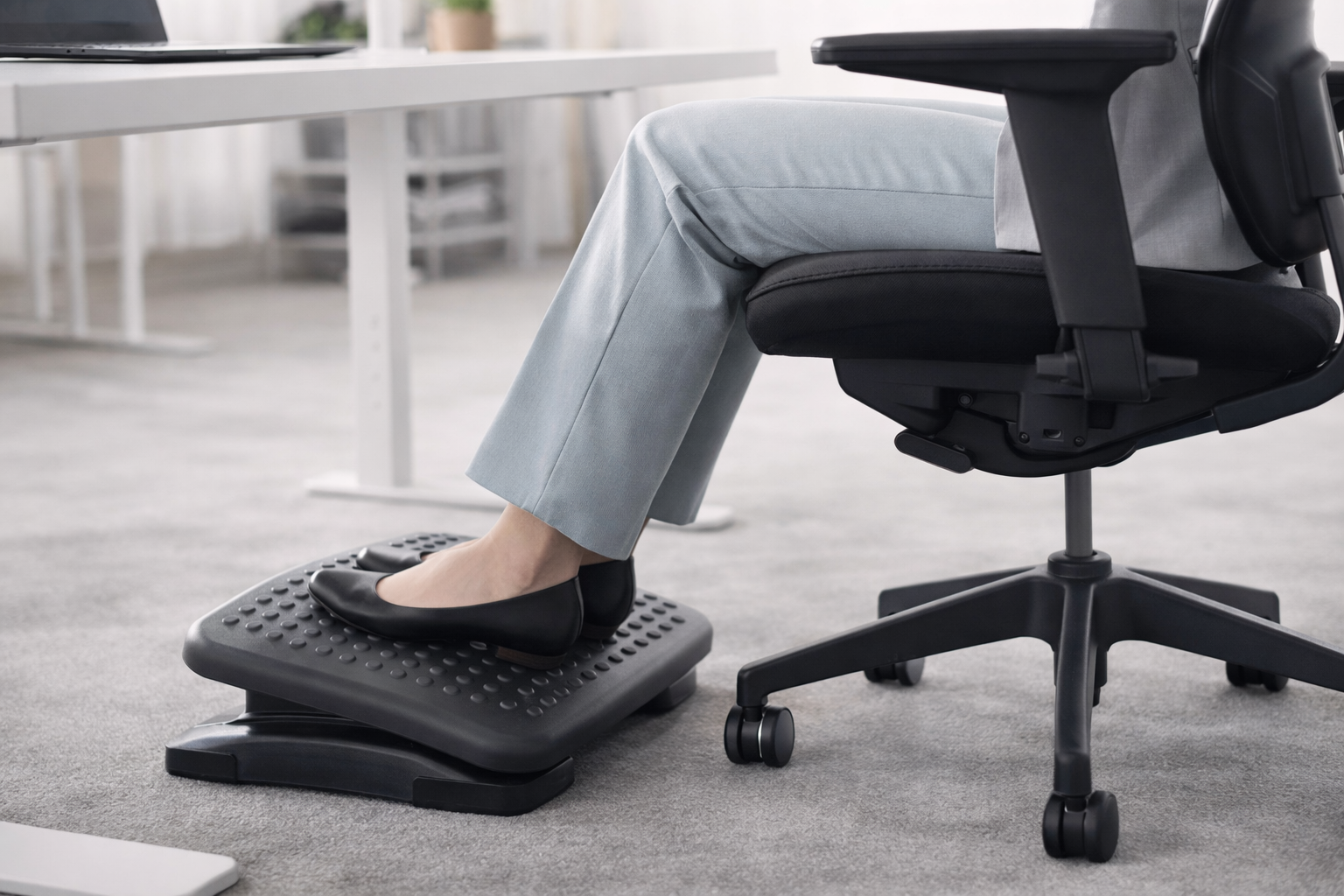
How an Ergonomic Footrest Influences Whole-Body Sitting Mechanics
Where your feet rest while sitting may seem like a minor detail, but it plays a defining role in how your body experiences seated work. Foot position directly affects stability, alignment, and how much effort your body must exert to remain upright over time.
Proper foot support is not an optional accessory or a comfort upgrade. It is a structural foundation that anchors the sitting posture. When the feet are supported consistently, the body can organize itself more efficiently—allowing the pelvis to settle, the spine to maintain balance, and muscles to work with less unnecessary tension.
This guide explores why foot support matters from a mechanical standpoint, how its absence subtly undermines posture and comfort, and how integrating foot support into a complete ergonomic system improves whole-body sitting mechanics. Footrests are one of several essential ergonomic accessories that enhance comfort and functionality in a workspace. By understanding the role of the feet, you can make informed adjustments that reduce strain, increase stability, and make sitting feel more sustainable throughout the day.
Why Sitting Can Feel Unstable—Even With a Good Chair
It’s a common and often frustrating experience: you invest in a well-designed ergonomic chair, make careful adjustments, and still find yourself feeling uncomfortable as the day goes on. Lower back stiffness, tight hips, restless legs, or a subtle sense of instability can persist—even when everything appears to be set up correctly.
What’s frequently overlooked is that sitting stability does not begin with the chair itself. It begins at the feet. When the feet do not rest firmly and consistently—whether they hover slightly above the floor, make uneven contact, or lack a stable surface—the body is forced to compensate to maintain balance. That compensation travels upward through the pelvis, spine, and shoulders, increasing muscular effort and reducing overall comfort.
Without stable foot contact, people often slide forward in their seat, lose full engagement with the backrest, or rely on constant postural adjustments to stay upright. Over time, these small corrections accumulate into persistent tension and fatigue. The result isn’t poor posture or a lack of discipline—it’s a sitting system missing a foundational point of support.
Understanding the role of foot support helps explain why discomfort can persist even with a high-quality chair. Once the feet are properly supported, the rest of the sitting posture has a chance to stabilize naturally, reducing unnecessary strain and making seated work feel more balanced and sustainable.

The Feet as the Foundation of the Sitting System
The human body functions as a connected, stacked system—where stability at the base influences alignment and effort throughout the entire structure. When you are seated, that base begins at the feet. Reliable foot support provides a stable reference point that allows the pelvis to settle into a balanced position and the spine to maintain its natural alignment with less muscular effort.
When this foundation is absent or inconsistent, the body must compensate to remain upright. Even subtle instability at the feet can disrupt how weight is distributed through the pelvis and lower body. As a result, muscles in the hips, lower back, and torso remain more active than necessary, working continuously to maintain balance rather than simply supporting posture. Over time, this increased muscular demand contributes to fatigue, stiffness, and a gradual decline in sitting comfort.
From a biomechanical perspective, seated posture depends on controlled weight transfer through the pelvis and lower extremities while supporting the mass of the torso and head. The feet play an active role in this process. They provide sensory feedback and mechanical stability that guide alignment and help the body organize itself efficiently. When foot contact is stable and consistent, the body can reduce unnecessary tension and settle into a more sustainable sitting position.
Ergonomic research and workplace design principles consistently emphasize that the feet are not passive points of contact. They function as an integral part of the sitting system, influencing balance, alignment, and overall postural efficiency. Supporting the feet properly allows the rest of the body to do less compensatory work—making sitting feel steadier, lighter, and easier to maintain throughout the day.

What Happens When Foot Support Is Missing or Inconsistent
When foot support is absent or inconsistent—such as when the feet hover just above the floor, make uneven contact, or lack a stable surface—the body instinctively begins to compensate in order to maintain balance. These adjustments are often subtle, but they occur continuously throughout the day.
One of the first changes typically occurs at the pelvis. Without a stable base, the pelvis may shift slightly forward or backward in an effort to find equilibrium. This altered position changes how the spine is supported, often increasing the demand on the lower back muscles to prevent slouching or sliding forward in the chair. Rather than resting against the backrest, the body relies more heavily on muscular effort to stay upright.
At the same time, inconsistent foot contact can increase pressure through the legs. When the feet are unable to distribute weight evenly, circulation may be compromised, contributing to sensations of heaviness, fatigue, or restlessness in the lower limbs by the end of the day. Proper foot support, such as using an ergonomic footrest with rocking or tilting features, can encourage circulation by promoting subtle movement and better blood flow during extended sitting.
This sequence of adjustments creates a “compensation cascade” that begins at the feet and travels upward through the body. Even with a well-designed chair, properly adjusted desk height, and an aligned monitor, discomfort can persist if the foundation of the sitting system is unstable. The issue is not the quality of individual components—it is the absence of consistent support at a critical contact point.
By addressing foot support, the body is able to reduce these compensatory patterns, allowing posture to stabilize naturally and muscular effort to decrease across the entire sitting system.

How Foot Support Stabilizes Pelvic and Spinal Mechanics
Effective foot support plays a direct role in stabilizing both pelvic position and spinal alignment during seated work. When the feet are placed in a consistent, comfortable position, they help establish a neutral orientation of the pelvis—one of the most important conditions for sustainable sitting posture. A neutrally positioned pelvis allows the spine to maintain its natural curves without excessive muscular effort, reducing strain on both muscles and connective tissues over time.
From an ergonomic perspective, stable foot contact reduces the need for constant postural correction. When the feet are supported, the body gains a reliable anchoring point that allows weight to be distributed more evenly through the pelvis and into the chair. This balance minimizes the tendency to brace through the lower back or hips, allowing postural muscles to assist rather than compensate.
Foot support can also influence sitting comfort through subtle, dynamic engagement. Features such as a gently angled or responsive foot surface encourage small, natural movements of the ankles and legs. These micro-adjustments help promote circulation, prevent stiffness, and reduce the feeling of static loading that often develops during long, uninterrupted sitting sessions.
By stabilizing the feet, pelvic alignment becomes more consistent and spinal balance easier to maintain. The result is a sitting posture that feels less effortful, more supported, and better suited to the demands of prolonged desk work.

Why Chairs and Cushions Alone Can’t Fix Instability
A well-designed ergonomic chair or seat cushion plays an important role in supporting the body by distributing pressure and maintaining spinal contact. However, even the best seating products address only part of the sitting equation. Foot support serves a different, equally essential function within the ergonomic chain. A foot rest is an ergonomic desk accessory designed to provide support, promote circulation, and relieve fatigue during prolonged sitting.
Chairs and cushions primarily support the body from behind and beneath. They influence how weight is borne through the pelvis and how the spine is supported against the backrest. But without a stable point of contact beneath the feet, the body lacks a reliable foundation. In response, it instinctively searches for balance—often by increasing muscular effort or shifting posture throughout the day.
This limitation becomes especially apparent for individuals who:
-
Cannot place their feet flat on the floor due to desk or chair height
-
Use chairs that lack sufficient adjustability
-
Continue to experience discomfort despite upgrading seating or adding cushions
In these situations, adding more back or seat support rarely resolves the underlying issue. The missing element is under-foot stability—the support that allows the pelvis to settle, weight to distribute evenly, and the entire sitting system to function as intended.
When foot support is introduced, the chair and cushion can finally do their job more effectively. The system works together, reducing the need for compensation and allowing sitting to feel steadier, calmer, and less demanding over time.

When Foot Support Becomes Essential (Not Optional)
Foot support shifts from a helpful addition to a necessary component when the sitting setup no longer allows the body to remain stable on its own. In these situations, the absence of under-foot support forces the body to compensate continuously, increasing strain and reducing overall comfort.
Foot support becomes essential when:
-
Your feet cannot rest flat on the floor due to chair height, desk height, or both
-
You remain seated for long periods with minimal opportunity to change posture
-
You experience leg fatigue, pressure buildup, restricted circulation, or numbness
-
You have addressed chair, desk, and monitor adjustments, yet discomfort persists
In these scenarios, unsupported feet undermine the body’s ability to stabilize itself. When the feet are consistently supported at an appropriate height and angle, the pelvis is able to settle into a more neutral position, and the spine can maintain balance with less muscular effort. Postural muscles no longer need to work continuously just to prevent sliding, slouching, or instability.
Ergonomic research and professional workstation assessments repeatedly identify foot positioning as a critical factor in seated comfort and postural efficiency, noting that ‘feet flat on the floor or on a footrest’ is key to maintaining good body alignment in seated work. When foot support is introduced at the right time, it often resolves discomfort that other interventions cannot—because it restores stability at the foundation of the sitting system.

What Proper Foot Support Should Actually Do
Effective foot support goes beyond simply placing an object beneath your feet. Its purpose is to provide functional, consistent support that improves how the entire body organizes itself while seated. Not all footrests achieve this, and understanding what to look for helps ensure foot support contributes meaningfully to whole-body sitting mechanics.
Proper foot support should:
-
Allow the feet to rest comfortably and consistently, reducing pressure through the legs
-
Encourage neutral hip and knee angles that support balanced pelvic positioning
-
Support subtle, natural movement to help maintain circulation and prevent stiffness
-
Integrate seamlessly with your chair and workstation without disrupting posture
Features such as a removable cover are important for easy cleaning and customization, allowing you to maintain hygiene and adapt the look or feel of your footrest. A high-quality, soft cover not only enhances comfort for extended use but also protects the foam from dust, debris, and wear, ensuring durability over time. Premium covers are often washable and made from materials that resist damage, making maintenance simple and adding a touch of luxury. Having enough room under your desk or table to accommodate the footrest is also essential for comfort and stability.
When these conditions are met, foot support becomes an active contributor to postural stability rather than a passive accessory. For example, the Serenform Axis Footrest is designed to elevate the feet to a supportive height, promote lower-body alignment, and incorporate gentle rocking. Its high-density foam construction provides excellent comfort and support, conforming to your feet while maintaining its shape over time. The soft feel of both the cover and foam ensures comfort during long hours of use. The ergonomic shape and contoured design support different users, adapting to various foot positions. You can flip the footrest for alternative uses, such as rocking or adjusting for comfort, adding versatility to its ergonomic benefits. The footrest functions much like a supportive pillow for your feet—lightweight, easy to move, and versatile for different needs. The rocking motion moves smoothly, enhancing ergonomic support and encouraging subtle movement. It offers a range of adjustable height settings to accommodate different users, and rubber feet provide stability while protecting your floors. The tilt feature is adjustable for user comfort, and the angle can be locked in place for added stability. The footrest is for durability and user satisfaction, and it works great for providing support and improving posture during office work. The removable, premium-quality cover is easy to clean and helps protect the foam from dust and damage. Both the cover and foam are designed to resist wear, maintaining their comfort and appearance over time. The footrest is compatible with standing desks, supporting comfortable transitions between sitting and standing. It allows you to stretch your feet and ankles, promoting comfort and circulation. Whether used at a table or desk, it enhances ergonomic support, provided you have enough room for it. While wood models may offer different aesthetics or durability, the foam construction of the Serenform Axis prioritizes comfort and lightweight versatility.
Thoughtful design ensures that foot support enhances comfort without adding bulk or creating interference with the rest of the ergonomic setup. When foot support functions as intended, it helps stabilize the foundation of the sitting system—allowing the pelvis and spine to remain aligned with less effort throughout the day.

Types of Footrests and Their Unique Benefits
With so many options available, choosing the right footrest can make a substantial difference in your comfort, posture, and overall health during office work. Each type of footrest is designed to address specific needs, from adjustable height settings to textured surfaces that massage tired feet. Here’s a closer look at the most popular types and the unique benefits they offer:
Adjustable Height Footrests Footrests with adjustable height settings are ideal for shared workspaces or anyone who wants to fine-tune their sitting position. By allowing you to raise or lower the platform, these footrests help you find the perfect angle and support for your feet and legs, regardless of your desk or chair height. This flexibility encourages healthy circulation and lets you change your foot position throughout the day, reducing fatigue and pressure on your thighs and knees.
Textured Surface Footrests If you spend long hours at your computer desk, a footrest with a textured surface can provide a gentle massage for your feet. Raised ridges, bumps, or holes stimulate the soles, helping to relieve tension and encourage blood flow. These footrests are especially comfortable for use with bare feet and can help reduce the feeling of fatigue that often comes with static sitting.
Rocking Footrests For those who prefer a bit of movement, rocking footrests offer a dynamic solution. Their gently curved or tilting platforms allow your feet to move back and forth, flexing your ankles and promoting subtle leg movement. This rocking motion not only supports circulation but also helps prevent stiffness and keeps your legs engaged, making it easier to maintain good posture throughout the day.
Footrests with Removable Covers Hygiene and easy maintenance are top priorities for many office workers, especially those who like to use their footrest without shoes. Footrests with removable covers can be machine washed, ensuring a clean and fresh surface at all times. Some models even allow you to swap out covers for different materials or colors, adding a personal touch to your workspace.
Sturdy Metal Footrests When stability is a must, metal footrests stand out for their solid construction and durability. These footrests provide a secure, non-slip platform that won’t slide or tip, even on carpeted floors. Their robust design makes them suitable for use with shoes or bare feet, and they’re built to withstand years of daily use in busy office environments.
Ergonomic Footrests Designed with health and posture in mind, ergonomic footrests often feature a sloped or contoured surface that encourages your feet and legs to rest in a natural, supportive position. By promoting proper alignment, these footrests help reduce strain on your back, hips, and legs, making them an excellent choice for anyone looking to improve their sitting ergonomics and reduce fatigue during long periods at the desk.
Footrests for Standing Desks As standing desks become more popular, so do footrests designed specifically for them. These models typically offer greater height settings and a sturdy platform to support your feet while standing or transitioning between sitting and standing. By providing a place to rest one foot at a time, they help reduce pressure on your legs and lower back, making it easier to alternate positions and stay comfortable throughout the workday.
Portable Footrests For those who move between different rooms, desks, or even travel for work, portable footrests offer lightweight convenience without sacrificing support. Easy to carry and quick to set up, these footrests ensure you always have a comfortable platform for your feet, whether you’re at your main office, a shared workspace, or working from the couch at home.
In summary, the right footrest can transform your sitting experience by providing the support, stability, and movement your body needs. Whether you prioritize adjustable height, a textured surface for massage, sturdy metal construction, or the flexibility of a portable design, there’s a footrest to suit every workspace and personal preference. By considering your specific needs and the unique benefits of each type, you can make a purchase that supports your health, posture, and productivity for years to come.

Integrating Foot Support Into a Whole-Body Sitting System
Foot support is most effective when it functions as part of a complete, well-coordinated ergonomic system rather than as a standalone solution. While proper foot support plays a critical role, it works in tandem with other elements of the workstation—including a correctly adjusted chair, appropriate seat support when needed, and a desk height that allows the upper body to remain relaxed and aligned.
When these components are thoughtfully integrated, the sitting system becomes more stable and efficient. The result is:
-
Improved postural stability, as the body has reliable contact points from the feet through the pelvis and spine
-
Reduced compensatory muscular tension, particularly in the lower back, hips, and core
-
Greater comfort and endurance during extended sitting periods
-
A setup that allows the body to remain upright with less continuous effort
Effective ergonomics is not about enforcing rigid posture rules or constant self-correction. Instead, it is about creating an environment that supports the body’s natural alignment and allows posture to settle on its own. When foot support is integrated into a whole-body sitting system, the body no longer has to fight gravity or compensate for missing structure—making seated work feel calmer, more balanced, and easier to sustain throughout the day.

Conclusion: Stability Changes Everything
Comfortable, sustainable sitting does not begin with the chair alone—it begins at the foundation. Where and how your feet make contact with the ground, or a stable support surface, plays a decisive role in how your entire body functions while seated. Proper foot support anchors the sitting system, allowing the pelvis to settle, the spine to maintain balanced alignment, and muscles to work with less unnecessary effort.
When the feet are consistently supported, strain no longer has to travel upward through the body. Instead of relying on constant adjustments and muscular bracing to remain upright, the body can maintain posture more naturally and efficiently. This shift often leads to improved comfort, reduced fatigue, and a greater sense of stability throughout the workday.
Ultimately, effective ergonomics is about reducing the effort required to sit well. By addressing stability at the feet, you create conditions that allow the rest of the body to relax into alignment—making sitting feel less demanding and easier to sustain. With proper support in place, attention can return to the work itself, rather than the discomfort that too often accompanies long hours at a desk.