How the Ergonomic System Reduces Strain Better Than Single Products
Many people invest in ergonomic chairs, seat cushions, lumbar pillows, or standing desks expecting meaningful, lasting relief. Yet despite these efforts, it’s common to finish the workday with lingering stiffness in the lower back, shoulders, or neck.
If this feels familiar, it’s not a personal failure—and it’s not a matter of trying harder. A growing number of people experience sitting discomfort even with ergonomic products in place. The reason is often structural. Single ergonomic products are typically designed to address one point of contact or one symptom at a time. While this can improve comfort initially, it rarely accounts for how the body functions as a connected system when seated. Human factors and physical ergonomics are scientific approaches that consider the entire human body and its biomechanical characteristics to optimize comfort, health, and performance.
Sitting places continuous demands on the pelvis, spine, and supporting musculature simultaneously. When support is applied in isolation, the body compensates elsewhere to maintain balance and alignment. Over time, this compensation can lead to persistent strain rather than sustained relief.
This article examines why integrated ergonomic systems reduce sitting-related strain more effectively than individual products, and how a coordinated, whole-body approach to support can make sitting feel more stable, less demanding, and more sustainable—especially during long workdays. With evolving work paradigms and the prevalence of office jobs, more people are exposed to prolonged sitting, increasing the need for improved occupational safety and comprehensive ergonomic solutions.

Introduction to Ergonomics
Ergonomics is a scientific discipline concerned with understanding how human beings interact with other elements of a system—whether that’s office furniture, technology, or the broader working environment. By applying theory, principles, data, and methods, ergonomics aims to optimize human well-being and overall system performance. According to the International Ergonomics Association, this multidisciplinary field addresses not only the physical aspects of work, but also cognitive and organizational factors that affect how people perform and feel on the job.
At its core, ergonomics is about designing work tasks, environments, and tools to fit the capabilities and limitations of people, rather than forcing people to adapt to poorly designed systems. This approach helps reduce the risk of work-related musculoskeletal disorders (WRMSDs), which are among the most common occupational health problems. By following ergonomic principles, organizations can improve worker productivity, enhance well-being, and create safer, more supportive workplaces. In short, ergonomics applies scientific discipline to ensure that every element of the work system supports both human health and system performance.

Why Single Ergonomic Products Often Fail Over Time
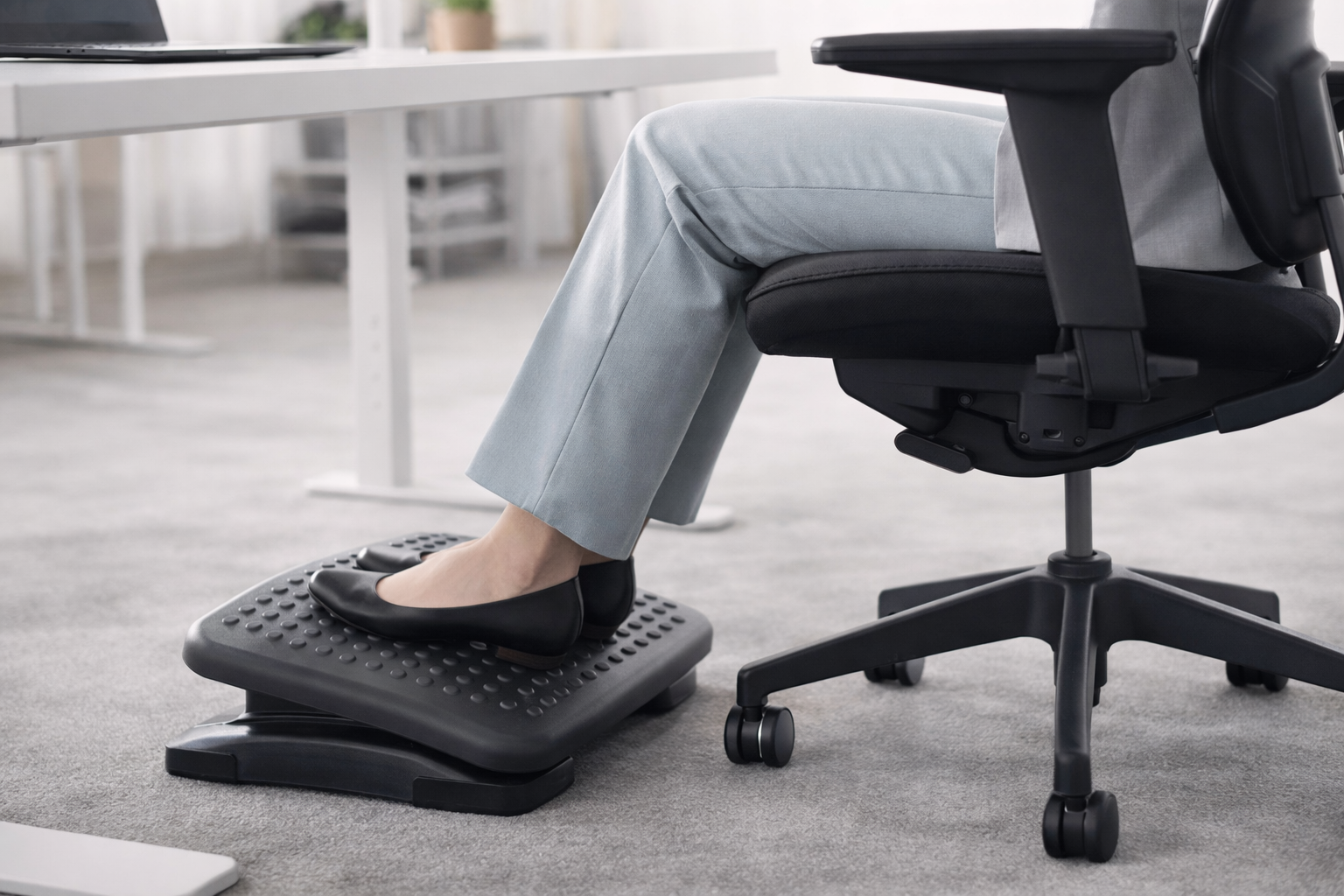
At first glance, it can feel counterintuitive. An ergonomic pillow or back support may provide noticeable comfort initially, yet discomfort often returns—or simply shifts to another area. This happens because isolated ergonomic solutions tend to redistribute strain rather than reduce it altogether.
Most single ergonomic products are designed to support one specific point of contact. However, the body functions as an interconnected system. When support is added to one area without addressing the rest of the seated posture, other muscles and joints must compensate to maintain stability and balance. These compensations affect interactions between different body regions and involve complex mental processes and motor response, as the brain and body work together to adapt to new support conditions. Over time, this compensation increases muscular effort elsewhere, often creating new areas of tension or fatigue.
For example:
-
A lumbar cushion may reduce pressure in the lower back, but if pelvic alignment and upper-body support remain unaddressed, the neck and shoulders may absorb more load.
-
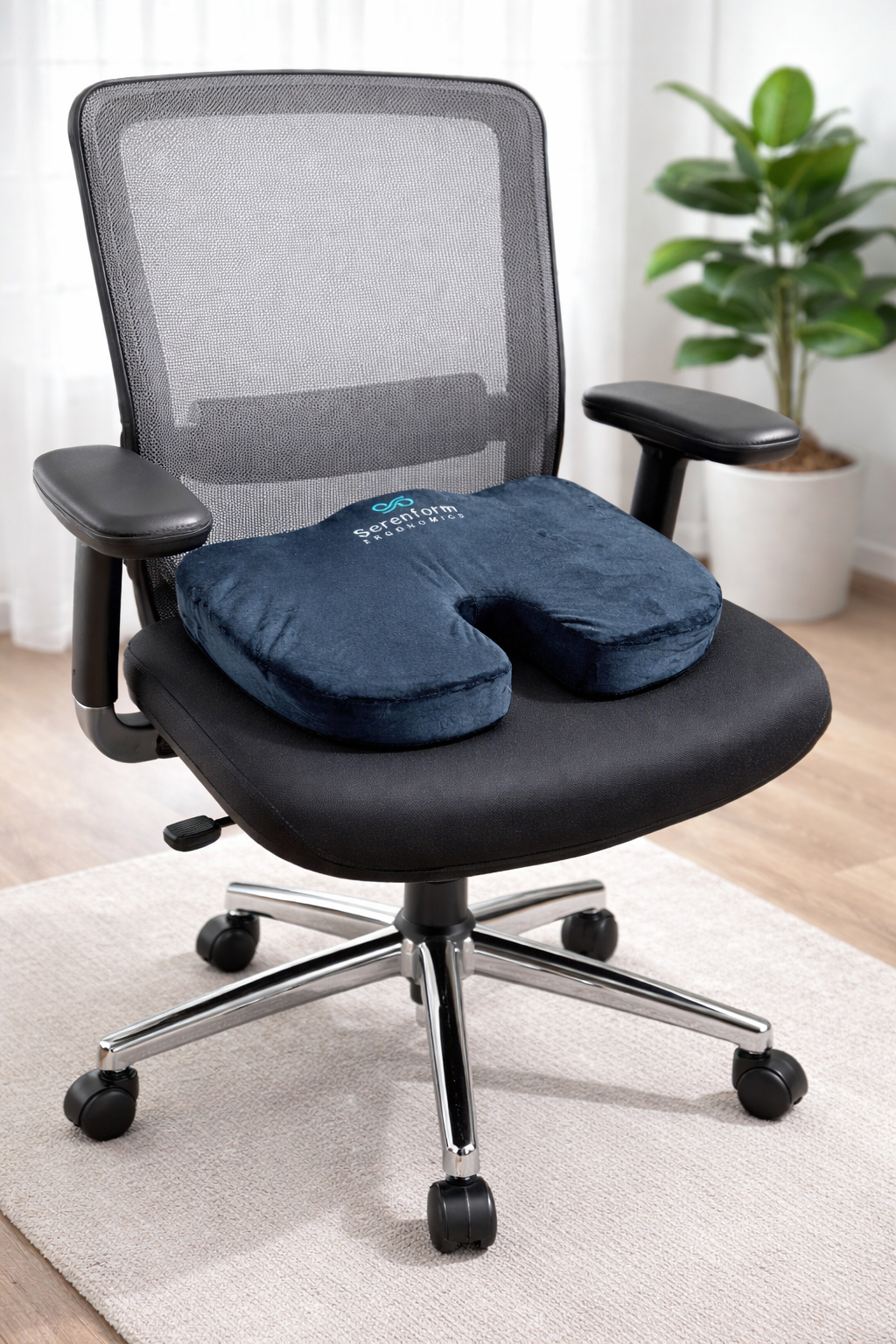
A seat cushion can improve short-term comfort by softening pressure points, yet it does not inherently stabilize the pelvis or maintain spinal alignment under prolonged sitting.
In these situations, discomfort is not eliminated—it is simply displaced. Because the total mechanical load on the body remains unchanged, relief tends to be temporary or incomplete. Lasting strain reduction requires support that works across multiple regions of the body simultaneously, rather than addressing symptoms one point at a time. In developing comprehensive ergonomics programs, it is essential to consider sociotechnical systems and organizational ergonomics, ensuring that both social and technical factors are addressed for effective, system-wide ergonomic solutions.

How Sitting Strain Actually Builds During the Day and Leads to Work Related Musculoskeletal Disorders
Discomfort from prolonged sitting rarely appears all at once. Instead, it builds gradually, often going unnoticed until fatigue, stiffness, or soreness becomes difficult to ignore. When the body remains seated for extended periods, continuous pressure is placed on the same tissues, joints, and muscles. Over time, this sustained load reduces circulation, increases muscular effort, and contributes to cumulative strain.
Research supports this pattern. Studies examining workplace ergonomics have found that environmental and multi-component ergonomic interventions—such as coordinated adjustments to seating and workstations—can interrupt this cycle of continuous strain. In fact, evidence suggests these approaches can reduce overall sitting time by an average of 38 minutes per workday, helping lessen prolonged mechanical stress on the body and supporting health and safety in the workplace.
However, the issue goes beyond how long we sit. The real challenge is static posture. Even an anatomically “correct” posture becomes problematic when it is held for hours without adequate support. Muscles that should assist posture intermittently are instead required to work continuously, and small imbalances in how weight is distributed begin to compound. Without integrated ergonomic support, these subtle shifts accumulate, leading to fatigue and discomfort by the end of the day.
Effects of Continuous Sitting vs. Reduced Strain With Support
| Aspect |
Continuous Sitting |
Supported, Integrated Ergonomic Setup |
|---|---|---|
| Muscle fatigue | High | Lower |
| Spinal alignment | Variable | More stable |
| Comfort over time |
Decreases |
Sustains longer |
| Strain accumulation |
Rapid | Reduced |
This contrast highlights a critical distinction: unsupported sitting allows strain to build unchecked, while integrated support helps manage load consistently throughout the day. Rather than reacting to discomfort after it appears, a well-designed ergonomic system works proactively to reduce the conditions that allow strain to accumulate in the first place. Achieving this requires a multidisciplinary design process that incorporates ergonomic principles from the outset to ensure the system effectively minimizes strain.

Why Posture Alone Can’t Solve Sitting Strain
Posture advice is often framed as a simple directive: sit up straight. While well intentioned, posture cues on their own are rarely an effective long-term solution for sitting-related strain. The reason is mechanical, not motivational. Maintaining “good” posture is an active task—it requires continuous muscular engagement to hold the body upright against gravity.
Without adequate structural support from the seating environment, the body will inevitably relax out of a corrected posture. This isn’t a failure of discipline; it’s a natural response to fatigue. Muscles that are asked to maintain alignment all day eventually tire, and when they do, posture collapses back into the path of least resistance. In addition to physical fatigue, cognitive ergonomics highlights how increased mental workload and work stress can further reduce the ability to maintain posture, as mental resources are diverted to other tasks.In addition to physical fatigue, cognitive ergonomics highlights how increased mental workload and work stress can further reduce the ability to maintain posture, as mental resources are diverted to other tasks.
Ergonomic systems address this limitation by providing passive alignment. Rather than relying on constant reminders or conscious correction, integrated support holds the pelvis, spine, and upper body in more neutral positions automatically. This reduces the need for muscles to brace continuously and allows the body to remain aligned with far less effort.
This distinction explains why many people feel they must monitor their posture throughout the day. When support is insufficient, alignment depends on attention and effort. In ergonomic system design, human reliability and human computer interaction are also critical, as they influence how effectively users can maintain proper alignment with minimal conscious effort. When support is properly designed and integrated, alignment becomes the default. Sitting feels calmer, less demanding, and far more sustainable because the body is no longer required to “hold itself together” for hours at a time.

What Makes an Ergonomic System Different From Ergonomic Office Furniture
The key difference between an ergonomic system and a single ergonomic product lies in how the body is supported as a whole. An ergonomic system is not simply a collection of accessories—it is a coordinated approach that accounts for how the body’s structures interact during sitting.
When seated, the body functions as a connected chain. The position of the pelvis influences spinal alignment. Spinal alignment affects shoulder positioning. Shoulder positioning, in turn, impacts the neck and head. When support is applied in only one location, these relationships are left to compensate on their own. When support is integrated across multiple contact points, the entire kinetic chain becomes more stable.
A well-designed ergonomic system addresses multiple foundational elements simultaneously, including:
-
Pelvic alignment and hip support, which establish a stable base for the rest of the body
-
Spinal curvature and lumbar support, helping maintain neutral alignment under sustained load
-
Core engagement without constant effort, reducing the need for muscular bracing
-
Shoulder, neck, and head alignment, minimizing upper-body tension and fatigue
Establishing clear design specifications and integrating quality management practices are also essential in ergonomic system development, ensuring that technical and organizational requirements are met for optimal performance and safety.
In contrast, a single ergonomic product typically influences just one area. While this can provide localized relief, it rarely changes how the rest of the body organizes itself during sitting. The result is often partial improvement rather than meaningful, lasting change.
Research supports this systems-based approach. Multi-component ergonomic programs and participatory strategies, where the seating environment and support elements work together, consistently demonstrate greater reductions in musculoskeletal symptoms than isolated interventions alone (IJFMR). This reinforces the importance of addressing ergonomics as a coordinated framework rather than a series of independent fixes.
For individuals seeking this kind of integrated support, examples of system-based solutions include:
-
Sit Well Bundle: https://serenform.com/products/sit-well-bundle
- Home Office Complete Bundle: https://serenform.com/products/home-office-complete-bundle

How Integrated Support Reduces Total Strain Across the Body
One of the most important distinctions between isolated ergonomic products and integrated systems is what happens to overall load on the body. Single products often shift pressure from one area to another. Integrated support, by contrast, is designed to distribute load more evenly and reduce total strain. Human system design and technology-based approaches play a key role in optimizing ergonomic systems, ensuring that support solutions are comprehensive and tailored to human well-being and efficiency.
In practical terms, this means the body is supported in a way that allows its natural structure to work as intended. When the pelvis is stabilized in a neutral position, it creates a solid foundation for the rest of the body. From there, the spine can stack more naturally, reducing the need for surrounding muscles to compensate for instability or misalignment.
When spinal curves are properly supported, muscular tension decreases. The lower back is no longer required to brace constantly, and the upper body is relieved of the subtle effort it often makes to stay upright. As a result, the head and shoulders can remain aligned without ongoing muscular correction or fatigue.
Because these supports function together, pressure is no longer concentrated in a single area, nor is it repeatedly shifted from one region to another throughout the day. Muscles are able to assist posture rather than hold it indefinitely, and joints experience more consistent, manageable loads.
The outcome is not just improved comfort in the moment, but a measurable reduction in how tiring sitting feels over time. By lowering the overall physical demand placed on the body, integrated ergonomic systems make sitting more sustainable and significantly reduce the likelihood of cumulative, chronic strain. Leveraging new technologies and information technology further enhances ergonomic support, enabling more adaptive solutions and reducing strain through advanced digital tools and improved information processing.

Why Ergonomic Systems Are Better for Long-Term Use to Optimize Human Well Being
For many professionals, extended sitting is not an occasional requirement—it is a daily reality. Knowledge work, remote environments, and screen-based tasks continue to demand long hours at a desk. In this context, ergonomic solutions must be sustainable over time, not merely comfortable in the short term. Effective ergonomics programs and community ergonomics initiatives can play a crucial role in reducing employee turnover and supporting long-term organizational success by fostering safer, healthier, and more collaborative work environments.
Ergonomic systems are better suited to this reality because they are designed with endurance in mind. Rather than offering brief relief at a single pressure point, they support the body in a way that reduces cumulative strain across the workday and over repeated days of sitting.
Well-designed systems:
- Help reduce musculoskeletal discomfort over time, not just in the moment, by lowering overall physical demand during seated work (MDPI).
- Address multiple areas of strain simultaneously, reducing the likelihood that relief in one area creates overload elsewhere.
- Operate quietly in the background, holding alignment and support without requiring constant adjustment, awareness, or effort.
This consistency is critical for long-term use. When support is reliable and integrated, the body does not need to repeatedly adapt or compensate. Muscles fatigue more slowly, posture remains more stable, and sitting becomes less taxing as the hours accumulate.
Ultimately, ergonomic systems do more than make sitting feel easier in the short term. They help the body withstand the repetitive demands of seated work, day after day, by reducing the conditions that allow strain to build in the first place.

From Fixes to Frameworks — Rethinking Ergonomic Solutions
At its core, the distinction between single ergonomic products and ergonomic systems is a matter of scope and intent. Single products are designed to address isolated symptoms. Ergonomic systems are designed to address the mechanics that create those symptoms in the first place.
A single fix may soften a pressure point or relieve discomfort in one area, but it rarely alters how the body is supported as a whole. When the underlying support structure remains unchanged, the body continues to compensate, and discomfort often returns—sometimes in a different location. This is why a new chair, cushion, or accessory can feel helpful initially, yet lose its effectiveness over time. The limitation is not user error; it is incomplete support.
Shifting from fixes to frameworks means changing how ergonomics is approached altogether. Instead of asking, “What hurts right now?” the more effective question becomes, “What is unsupported throughout the workday?” That perspective emphasizes stability, alignment, and load management across the entire seated posture. In implementing ergonomic frameworks, it is essential to optimize socio technical systems, organizational structures, and cooperative work to ensure that communication, teamwork, and work design all contribute to a safer and more efficient environment.
When ergonomics is treated as a framework rather than a series of isolated solutions, the experience of sitting changes. Sitting becomes less reactive and more stable. Focus improves because physical strain is reduced. Over time, productivity and overall well-being benefit not from constant adjustments or reminders, but from an environment that consistently supports the body’s needs—including the influence of virtual organizations in shaping modern ergonomic system design.

Conclusion: When Ergonomics Work Together, Sitting Stops Feeling Like Work
The central takeaway is a reassuring one: discomfort from sitting is not inevitable, nor is it something you simply have to tolerate as part of modern work. In most cases, persistent sitting strain is the result of incomplete support, not the act of sitting itself.
Single ergonomic products can be useful for addressing a specific area of discomfort, but because the body functions as an interconnected system, isolated fixes rarely reduce overall mechanical load. Without coordinated support, strain is often redistributed rather than resolved. Ergonomic systems approach the problem differently. By supporting multiple points of contact simultaneously, they promote natural alignment, reduce compensatory muscle effort, and lower total strain across the body.
For those looking to move beyond short-term relief and toward lasting comfort, exploring integrated solutions—such as a sit well bundle or a home office complete bundle—can be a practical next step. These systems are designed to work together, providing consistent support throughout the workday rather than relying on constant adjustment or attention. In addition to addressing workstation setup, ergonomic systems also tackle materials handling, support skilled performance, and improve productivity by focusing on relevant topics and ensuring that ergonomic design applies theory to real-world challenge
Ultimately, investing in an ergonomic system is not just about adding more products to a workspace. It is about establishing a supportive framework that allows the body to remain stable, relaxed, and resilient over time. When ergonomics work together, sitting becomes less demanding—and work no longer feels like something your body has to endure.