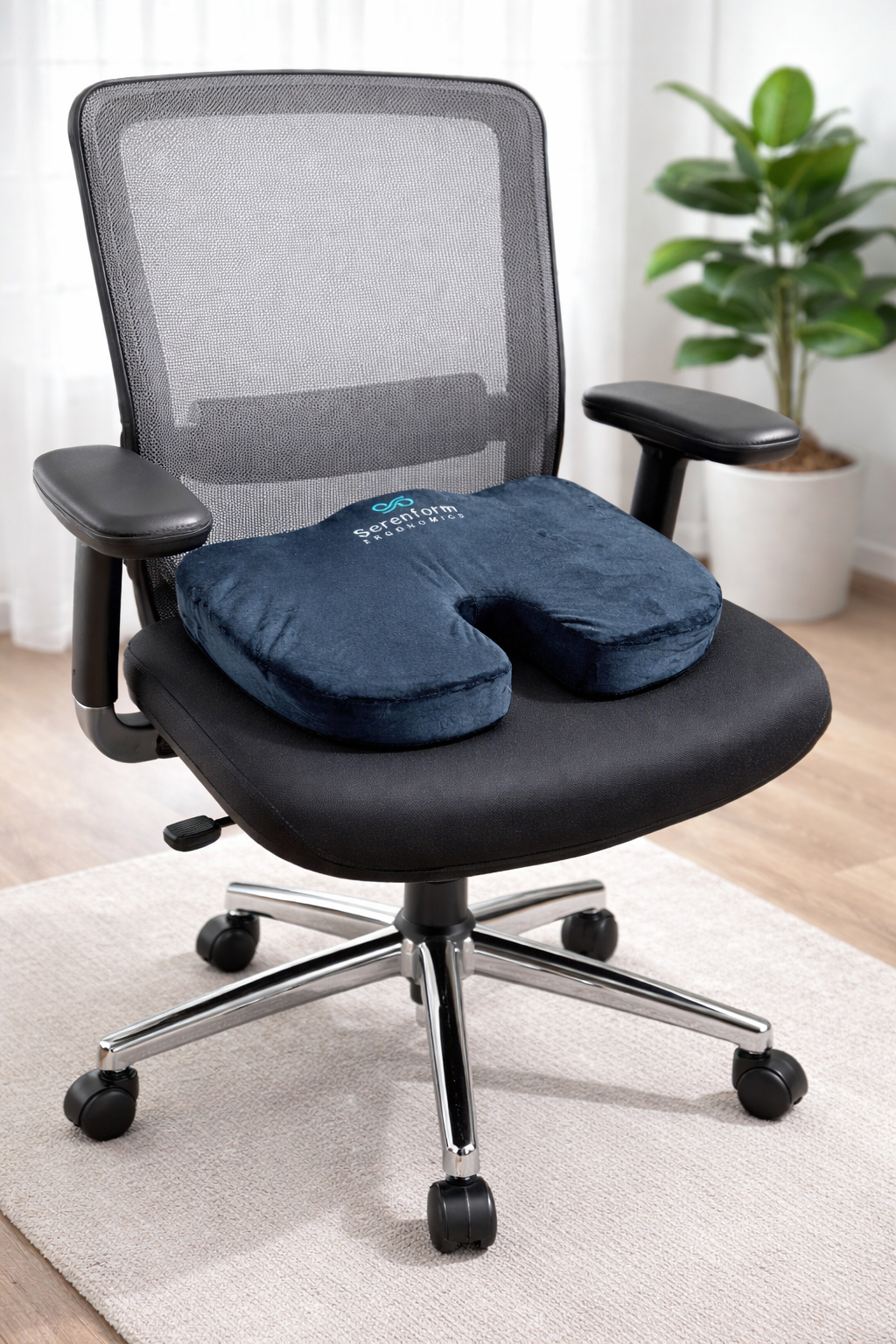
How Ergonomic Seat Cushion Design Affects Long-Term Support
If you’ve ever added a seat cushion to your chair expecting it to resolve ongoing discomfort—only to notice that soreness returns a few hours later—that experience is more common than many people realize.
Most seat cushions are designed to feel comfortable at first contact.
Far fewer are engineered to provide consistent, long-term sitting support.
The difference is not a matter of luck, nor is it a failure of posture awareness or discipline. It comes down to cushion design—specifically how a cushion manages pressure, preserves its structure under sustained load, and supports the body as sitting time accumulates throughout the day. When comparing all the cushions available, it's clear that not all the cushions provide the same level of support or promote proper posture, as some may be too soft or lack the ergonomic features needed for healthy alignment.
In this article, we examine how cushion structure and pressure distribution affect long-term support, sitting endurance, and spinal alignment. By understanding these mechanics, you can better identify what genuinely supports your body during extended desk work—including the importance of choosing cushions that help maintain proper posture—and what simply feels good temporarily without addressing the underlying strain.
Why Comfort Alone Doesn’t Equal Support
One of the most persistent misconceptions in ergonomic seating is the belief that softness automatically provides support. While a soft cushion may feel pleasant at first contact, initial comfort is not the same as sustained support.
Soft cushions often create an immediate sense of relief because they reduce surface pressure and dampen sensory feedback. They feel plush and forgiving, which can make sitting seem easier in the moment. However, this sensation is short-lived. Comfort is immediate; support is cumulative.
A cushion can feel comfortable while still failing to support the body effectively. In many cases, overly soft designs:
-
Allow excessive sinking that destabilizes the pelvis
-
Concentrate pressure beneath the sit bones rather than distributing it
-
Permit gradual postural collapse as structure is lost
Cushions lacking ample support can lead to these issues, undermining both comfort and spinal alignment.
As sitting time increases, these cushions frequently bottom out—a point at which the material compresses to the extent that little functional support remains. When this happens, the body must compensate. Muscles engage continuously to maintain balance and alignment against gravity, increasing effort rather than reducing it.
This compensatory muscular activity is subtle at first, but it accumulates over time. What begins as comfort often transitions into fatigue, stiffness, and reduced sitting tolerance.
Long-term sitting support is not defined by how a cushion feels in the first few minutes. It is defined by how well that cushion maintains structure, distributes load, and supports alignment after hours of use.

What Happens to a Cushion After Hours of Sitting
When you sit, your body places continuous load through a relatively small contact area—primarily the pelvis and upper thighs. Over time, all materials respond to this sustained pressure in predictable mechanical ways.
Most seat cushions experience a combination of:
-
Compression creep: a gradual loss of height as materials remain under constant load
-
Material fatigue: a reduced ability to rebound or return to their original shape
-
Structural flattening: deformation in the exact areas where support is most critical
As these changes occur, the cushion’s ability to distribute pressure evenly begins to decline. Load shifts to fewer contact points, stability decreases, and the pelvis becomes less supported. In response, the body compensates by increasing muscular engagement—using the lower back, hips, and core to maintain balance and alignment.
This compensation is rarely noticeable at first. However, as hours pass, the added muscular demand accumulates. What felt acceptable early in the day can become uncomfortable or even exhausting by mid-afternoon, despite no change in posture or activity.
This is why cushions designed primarily for initial softness often fail during long work sessions. Effective long-term sitting support depends on a cushion’s ability to preserve its structure and load-bearing capacity over time—not on temporary comfort alone.

Pressure Distribution and Why Your Body Feels Fatigued
The human body tolerates sustained pressure most effectively when that pressure is distributed evenly, rather than concentrated in a few small areas. In seated work, this principle plays a critical role in how quickly fatigue develops. This aligns with ergonomic research noting that surface pressure can cause discomfort while sitting.
Poorly designed seat cushions often fail to manage load appropriately, resulting in:
-
High-pressure points beneath the sit bones
-
Excessive loading through the tailbone
-
Uneven pressure distribution across the hips and upper thighs
When pressure becomes concentrated, the issue extends beyond localized discomfort. The body instinctively attempts to protect sensitive tissues by shifting weight and increasing muscular activity. This subconscious bracing commonly involves the lower back, hips, and core—muscle groups that are not intended to remain engaged for prolonged periods simply to maintain a seated position.
Over time, this continuous low-level muscular effort accumulates. Even in the absence of sharp or acute pain, the result is a growing sense of fatigue, restlessness, and reduced sitting tolerance. The body is working harder than it should to remain stable.
Effective pressure distribution reduces the need for these constant adjustments. When load is spread more evenly across the seating surface, muscles can relax, posture becomes more stable, and sitting demands less ongoing effort from the body.

How Cushion Structure Influences Spinal Alignment
Spinal alignment during sitting does not begin at the backrest or with conscious posture correction.
It begins at the pelvis.
The pelvis serves as the foundation of the seated posture. When a seat cushion lacks sufficient structure—or collapses unevenly under load—the pelvis is no longer adequately supported. As this occurs:
-
The pelvis tends to rotate backward
-
Lumbar support loses its ability to maintain the natural curve of the lower back
-
The spine gradually shifts out of neutral alignment
This process is often misinterpreted as poor posture or lack of awareness. In reality, it is a mechanical failure, not a behavioral one. Without stable support beneath the pelvis, the body cannot maintain alignment consistently, regardless of effort.
A well-designed ergonomic cushion helps maintain pelvic neutrality by providing stable, balanced support under sustained load. When the pelvis is properly supported, the spine can align naturally above it—without requiring constant muscular engagement or reminders to “sit up straight.”
When alignment is supported passively:
-
Muscles assist posture rather than compensate for instability
-
Compressive forces on spinal discs are reduced
-
Sitting feels steadier, calmer, and less demanding over time
For this reason, cushion structure plays a critical role in spinal alignment—often as important as, if not more important than, surface softness.

Cushion Materials and Construction: The Foundation of Lasting Support
When it comes to finding the perfect cushion for your office chair, the materials and construction are the true foundation of lasting support and comfort. Not all seat cushions are created equal—what’s inside and how it’s built can make all the difference in how you feel after hours of sitting at your desk.
Memory foam seat cushions are a popular choice for those seeking both pressure relief and consistent support. High-density memory foam contours to your body, distributing weight evenly and helping to relieve pressure on sensitive areas like the tailbone and hips. This makes a memory foam cushion an excellent option for anyone dealing with back pain, hip pain, or even sciatic nerve discomfort during prolonged sitting. The best memory foam seat cushions maintain their shape over time, ensuring you get the same level of support day after day.
Gel cushions are another great seat cushion option, especially if you’re prone to excessive sweating or need extra pressure relief. The gel layer helps dissipate heat, keeping you cool and comfortable even during long periods at your desk or in your car seat. Many office chair cushions combine gel and foam layers to offer both the cooling benefits of gel and the structural support of foam.
Construction quality is just as important as the materials themselves. A sturdy office chair cushion should have a solid base that resists flattening, along with a durable, washable cover to keep things fresh and hygienic. Breathable mesh or cotton covers help prevent discomfort from heat buildup, while a non-slip bottom ensures your chair cushion stays securely in place—even on smooth office chairs or car seats. Features like an adjustable strap can add extra stability, making sure your support cushion doesn’t shift during use.
For those who spend extended periods sitting, lumbar support pillows can provide targeted relief for the lower back. A lumbar support pillow or back cushion helps maintain healthy posture and reduces the risk of lower back pain by supporting the natural curve of your spine. Pairing a lumbar support pillow with a high-quality seat cushion can offer ultimate comfort and structural support, transforming your desk chair into an ergonomic chair cushion setup.
Specialized features like a coccyx cutout are designed to relieve pressure on the tailbone, making a coccyx cushion or tailbone pain relief cushion ideal for anyone experiencing tailbone pain or pressure sores. These ergonomic design elements help reduce extra pressure on sensitive areas, allowing you to sit comfortably for longer periods without discomfort.
Ultimately, the best seat cushion for your office, desk chair, wheelchair, or car seat is the one that matches your unique needs and body type. Whether you’re looking for a foam seat cushion, a gel cushion, or a memory foam seat cushion, prioritize construction quality, pressure relief, and support features. With the right chair pad or support pillow, you can enjoy ultimate comfort, proper support, and pain relief—making long sitting sessions feel effortless and helping you maintain a healthy posture throughout your workday.

The Difference Between Ergonomic Design and Marketing Claims
The term “ergonomic” has become one of the most widely used—and frequently misunderstood—labels in seating products. In many cases, it is applied to cushions that prioritize comfort messaging without addressing the mechanics of long-term support.
A significant number of seat cushions rely on:
-
Generic memory foam as the primary material
-
Uniform density across the entire surface, with no functional support zones
-
Comfort-focused marketing that emphasizes softness while offering little explanation of structural performance
While these features may create an appealing first impression, they do not necessarily translate into sustained support during prolonged sitting.
True ergonomic cushion design is centered on how load is managed over time, not simply how a material feels at initial contact. Effective designs consider the interaction between the body and the cushion under continuous use, focusing on stability, pressure distribution, and alignment. What sets effective ergonomic seat cushions apart is their ability to provide great support over time, ensuring comfort and resilience even during extended periods of sitting.
Key elements of functional ergonomic design include:
-
A purposeful shape that supports the pelvis in a neutral position
-
Density zoning that resists bottoming out in high-load areas
-
Materials selected for their ability to maintain structure under sustained pressure
The Serenform Summit Seat Cushion is an example of this design approach. Rather than relying on plush softness alone, it is engineered to support long-term sitting by maintaining structural integrity and promoting even pressure distribution throughout the workday. The objective is not short-term comfort, but sustained endurance.

What Long-Term Support Actually Feels Like
One of the most reliable indicators of effective support is how little attention it demands. When a seating system is working as intended, it does not call attention to itself through noticeable comfort or discomfort—it simply allows the body to remain supported without effort.
With proper long-term sitting support:
-
Sitting feels neutral rather than distinctly “comfortable” or uncomfortable
-
The need to shift positions or readjust decreases
-
End-of-day fatigue is reduced, even after extended work sessions
-
Focus and mental clarity are easier to maintain over time
In this state, the body expends less energy stabilizing itself against gravity. Muscles are no longer engaged unnecessarily, and subtle compensations diminish. Support becomes part of the background rather than something that requires constant awareness.
This distinction is important. Short-term comfort may help you tolerate sitting briefly, but sustained support allows you to complete a full workday with less cumulative strain—and with more capacity remaining at the end of it.

Why Support Needs Change as Sitting Tolerance Changes
As more years are spent working at desks, many people notice that sitting becomes less forgiving. Fatigue appears sooner, recovery takes longer, and the body becomes more sensitive to pressure and instability. These changes are often attributed to age alone, but they are better understood as adaptation to prolonged, repetitive strain.
This shift does not reflect weakness or declining discipline. It reflects the body’s reduced tolerance for unsupported load over time.
As sitting tolerance changes:
-
Muscles fatigue more quickly when asked to stabilize posture continuously
-
Soft tissues become less resilient to concentrated pressure
-
Inadequate support allows strain to accumulate day after day
Under these conditions, long-term ergonomic support becomes increasingly important. A well-designed cushion helps offset these changes by providing consistent structure and pressure distribution, reducing the need for muscular compensation rather than increasing it.
The right support adapts to the body’s evolving needs. Instead of demanding more effort to remain comfortable, it reduces the underlying strain that makes sitting difficult in the first place.
Support is not an indulgence. It is a practical response to the realities of modern work—especially as prolonged sitting becomes a permanent feature of daily life.

Choosing a Cushion Designed for Endurance, Not Just Comfort
When selecting a seat cushion for long-term sitting support, initial impressions can be misleading. A cushion that feels pleasant at first contact may not be capable of supporting the body effectively over the course of a full workday. For this reason, evaluation should extend beyond immediate comfort and focus on how the cushion performs under sustained use. It's also important to choose a cushion that accommodates different body types, offering various sizes and support levels to ensure optimal comfort and support for users of different heights, weights, and body compositions.
Key questions to consider include:
-
Does the cushion maintain its structure and height after several hours of sitting?
-
Does it distribute pressure evenly rather than concentrating it in high-load areas?
-
Does it support pelvic neutrality, providing a stable foundation for spinal alignment?
-
Does it offer coccyx support for those needing tailbone relief?
-
Is it versatile enough to be used as a car seat cushion or for wheelchair users who require proper support for extended periods?
Comfort may determine how a cushion feels in the first few minutes. Design determines how your body feels at the end of the day.
Cushions designed for endurance prioritize structural integrity, pressure management, and consistent support. The Serenform Summit Seat Cushion reflects this approach by supporting the body quietly and reliably—reducing the need for constant adjustment and allowing sitting to feel steadier and less demanding throughout extended periods of work. The right ergonomic seat cushion can also help relieve pain associated with long-term sitting, such as lower back, hip, and joint discomfort. Premium options like Cushion Lab offer features such as a cutout for coccyx support, memory foam moldability, and customizable sizing, making them suitable for a wide range of users, including those with physical disabilities. Look for cushions with covers that can be washed in cold water for easy maintenance, and consider color options like navy blue for a stylish and practical choice.

Conclusion: When Cushion Design Is Right, Sitting Stops Feeling Like Work
Sitting discomfort is not an unavoidable consequence of desk work, nor is it a reflection of personal habits or discipline. In most cases, it is the predictable result of insufficient structural support during prolonged sitting.
When cushion design prioritizes effective pressure distribution, pelvic stability, and consistency under sustained load, the body no longer needs to compensate continuously just to remain upright. Muscular effort decreases, alignment becomes easier to maintain, and sitting places less cumulative demand on the body throughout the day.
Stretching plays an important role in recovery.
Movement helps restore circulation and reset the body.
But support is what allows you to endure extended periods of sitting without accumulating unnecessary strain.
When the mechanical conditions of sitting change, the body’s response changes as well. And when strain is reduced at its source, sitting stops feeling like something you have to push through—and becomes something you can sustain.