Best Seat Cushions for Back Pain and Sciatica Relief at Work
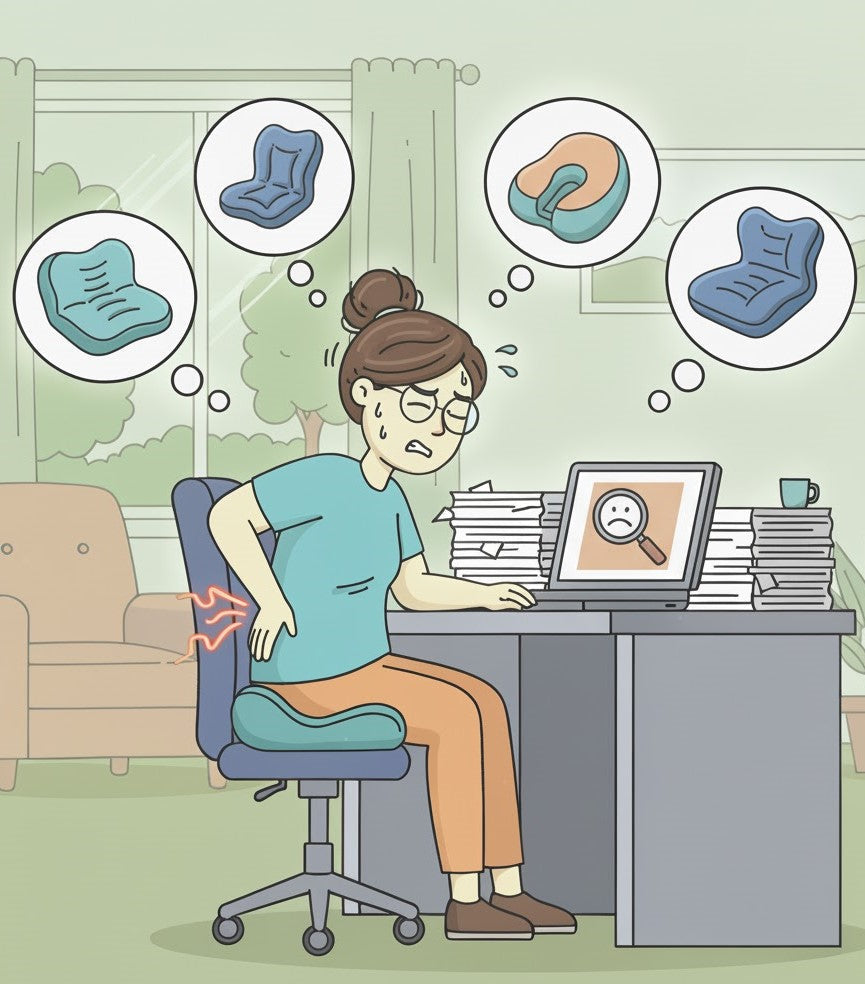
Back pain and sciatica have become some of the most common challenges for people who spend long hours sitting—especially at work.
If you’ve ever stood up after a long day at your desk and felt stiffness, tightness, or even sharp pain in your lower back or legs, you’ve already experienced how quickly these issues can develop.
According to the American Chiropractic Association (2023), nearly 80% of adults will experience some form of back pain during their lifetime—and a growing number of these cases are directly linked to prolonged sitting.
The problem is not just how long we sit, but how we sit.
Extended hours at a desk place continuous pressure on the lower spine and pelvis. Over time, this compresses the intervertebral discs, restricts blood flow, and places strain on the sciatic nerve—the body’s longest nerve, extending from the lower back through the legs. The result is often persistent discomfort, muscle tension, and pain that can extend well beyond the workday.
This is especially noticeable when sitting on chairs with minimal cushioning or poor support, where pressure builds quickly around the hips and tailbone.
Even with good posture, these effects are difficult to avoid.
Standard office chairs are rarely designed to support the body’s natural curves, often forcing the lower back and hips into positions that are difficult to maintain for long periods. What starts as mild discomfort can gradually turn into chronic pain, reduced mobility, and decreased focus throughout the day.
This is where ergonomic seat cushions make a meaningful difference.
Rather than simply adding softness, they are designed to redistribute pressure, support proper alignment, and reduce strain on sensitive areas like the lower back and sciatic nerve. By stabilizing the pelvis and encouraging a more neutral spine, a well-designed cushion helps your body stay in a position that is both more comfortable and more sustainable.
Investing in the right seat cushion isn’t about comfort alone—it’s about reducing daily strain and supporting long-term spinal health. Over time, this can help prevent issues such as persistent back pain, sciatic discomfort, and tailbone pressure that often result from prolonged sitting.

How Ergonomic Seat Cushions Work: The Science of Support and Pressure Relief
Not all seat cushions deliver the same level of support.
A true ergonomic seat cushion goes beyond surface comfort—it’s designed to work with your body’s natural structure, supporting proper alignment and reducing strain throughout the workday.
For people who sit for long hours, this difference becomes noticeable quickly.
1. Pressure Redistribution: The Foundation of Pain Relief
When sitting for extended periods, your body weight concentrates on a few key areas—the tailbone (coccyx), hips, and lower back.
Over time, this pressure can:
-
Compress sensitive tissues
-
Restrict circulation
-
Irritate the sciatic nerve
This is often why discomfort builds the longer you sit.
An ergonomic cushion is designed to redistribute this pressure more evenly, reducing strain on these high-pressure areas and allowing your body to sit in a more balanced position.
Key Features and Their Benefits
| Cushion Feature | Ergonomic Benefit |
|---|---|
| Contoured shape | Encourages spinal alignment and balanced posture while supporting the tailbone and lower back |
| High-resilience foam | Distributes body weight evenly to reduce pressure buildup and maintain support over time |
| Tailbone cutout | Minimizes direct pressure on the coccyx and reduces sciatic nerve irritation |
| Breathable cover | Promotes airflow and helps maintain comfort during long sitting sessions |
| Adaptive foam structure | Conforms to the body while preserving support for posture and pressure relief |
This combination of structure and responsiveness is what separates ergonomic cushions from standard pads. Instead of simply adding softness, they actively support how your body sits.
2. Spinal Alignment: Restoring Natural Posture
Proper posture begins at the pelvis.
When the hips tilt forward or backward—as they often do on flat or unsupportive chairs—the spine compensates. This leads to slouching, disc compression, and increased muscular effort.
An ergonomic cushion helps stabilize and slightly elevate the pelvis, encouraging a neutral spine position where the natural curve of the back is maintained.
This allows:
-
Better alignment from the lower back to the neck
-
Reduced strain on spinal structures
-
A more upright, sustainable sitting posture
When alignment improves, sitting requires less effort—and fatigue builds more slowly.
3. Circulation and Comfort: Supporting Long Work Sessions
Posture doesn’t just affect alignment—it also impacts circulation.
Without proper support, prolonged sitting can reduce blood flow to the lower body, leading to numbness, tingling, and discomfort.
By distributing weight more evenly, an ergonomic cushion helps:
-
Reduce pressure on blood vessels
-
Improve circulation
-
Allow muscles to relax instead of constantly compensating
The result is not just comfort—but comfort that lasts throughout the day.
A More Supportive Way to Sit
The Serenform Summit Seat Cushion is designed around these core principles.
Its high-resilience foam maintains structure over time, while its contoured shape supports proper pelvic positioning and spinal alignment. This helps reduce pressure on the lower back and sciatic region—two of the most common sources of discomfort during prolonged sitting.
Rather than simply making a chair feel softer, it helps your body sit in a more stable, supported position—so comfort and alignment can be maintained throughout the day.

Types of Seat Cushions: Finding the Right Fit for Your Needs
Choosing the right seat cushion can make a noticeable difference in your daily comfort—whether you’re working at a desk, driving, or sitting for extended periods.
While there are several types of seat cushions available, the key is understanding how each one supports your body during long hours of sitting.
Memory Foam Cushions
Memory foam cushions are popular for their ability to contour to the body.
They provide initial comfort and pressure relief by adapting to your shape. However, softer foam can compress over time, which may reduce support during longer sitting sessions.
Gel Cushions
Gel cushions are designed to improve airflow and create a cooler sitting experience.
They can help with temperature regulation, but often provide less structural support for maintaining proper posture over extended periods.
Hybrid Cushions
Hybrid cushions combine foam and gel to offer both support and breathability.
While they can provide a balance of comfort and cooling, their performance often depends on how well the materials maintain structure under consistent use.
Contoured Ergonomic Cushions
Contoured ergonomic cushions are designed specifically to support posture and reduce pressure in key areas like the tailbone and lower back.
These cushions help:
- Distribute weight more evenly
- Reduce pressure on sensitive areas
- Support proper pelvic positioning
For individuals experiencing back pain, tailbone discomfort, or sciatica, this type of cushion typically provides the most effective long-term support.
Choosing What Actually Works for Long Sitting
While each type of cushion has its benefits, the most important factor is how well it maintains support over time.
For prolonged sitting, the ideal cushion should:
- Retain its shape under continuous use
- Provide consistent pressure relief
- Support proper alignment, not just softness
This is where structured, ergonomic designs tend to perform better than standard soft cushions.
The Serenform Summit Seat Cushion is designed with this balance in mind—combining pressure-relief comfort with the structural support needed to maintain posture throughout long work sessions.

Key Features to Consider When Shopping for a Seat Cushion
Finding the right seat cushion isn’t about choosing the softest option—it’s about choosing one that provides consistent support throughout the day.
When sitting for long periods, the goal is not just comfort, but maintaining proper alignment and reducing pressure on key areas of the body.
Here are the features that matter most:
Material and Structure
The core material of a seat cushion determines how it feels—and how well it performs over time.
- Softer materials may feel comfortable initially but can compress with prolonged use
- More structured, high-resilience foam helps maintain shape and support throughout the day
For long sitting sessions, maintaining support is just as important as initial comfort.
Contoured Design
A contoured cushion is designed to support the natural shape of your body.
This helps:
- Reduce pressure on the tailbone
- Support the lower back and pelvis
- Encourage better sitting posture
For those experiencing back pain or sciatica, this type of design plays a critical role in reducing strain.
Pressure Relief
One of the main causes of discomfort while sitting is uneven pressure.
An effective cushion should:
- Distribute weight evenly
- Reduce pressure on sensitive areas like the hips and tailbone
- Help minimize numbness and discomfort over time
This is especially important for extended work sessions.
Stability and Fit
A cushion should stay securely in place and fit your chair properly.
Look for:
- A non-slip base to prevent shifting
- A size that matches your chair dimensions
- A design that allows you to sit fully supported without adjusting constantly
Stability helps maintain consistent posture throughout the day.
Practical Comfort Features
Small details can make a noticeable difference in daily use:
- Breathable materials to reduce heat buildup
- Removable, washable covers for easy maintenance
- Durable construction that holds up over time
These features support long-term usability and comfort.
Choosing What Works Long-Term
While many cushions offer short-term comfort, the most important factor is how well a cushion performs after hours of use.
The right cushion should:
- Maintain its structure throughout the day
- Support proper alignment without constant adjustment
- Reduce pressure without sacrificing stability
The Serenform Summit Seat Cushion is designed with these principles in mind—balancing pressure relief with structured support to help maintain comfort and posture during long periods of sitting.

Best Seat Cushions for Back Pain and Sciatica Relief: A Comparative Overview
If you’ve searched for the best seat cushion for back pain or sciatica relief, you’ve likely noticed how many options are available.
From basic memory foam pads to advanced ergonomic designs, the range can feel overwhelming. But in practice, only a small number of cushions provide both immediate comfort and the structured support needed for long-term relief.
To make the decision clearer, here’s how some of the most common cushion types compare:
Comparative Overview
| Brand | Material Type | Tailbone Cutout | Foam Density | Key Feature |
|---|---|---|---|---|
| Serenform Summit Seat Cushion | High-resilience ergonomic foam | ✔ | Balanced (medium-firm) | Orthopedic contour, breathable cover, and long-term structural integrity |
| Purple | Polymer grid | ✔ | Soft | Flexible grid design that adapts to body pressure |
| Everlasting Comfort | Memory foam | ✔ | Medium | Accessible, entry-level option for basic comfort |
| ComfiLife | Memory foam | ✔ | Soft | Lightweight and portable design |
While each option offers a level of comfort, the key difference comes down to how well the cushion maintains support over time.
Softer materials may feel comfortable at first but often lose structure with prolonged use. This can lead to uneven pressure distribution and reduced support—especially during long work sessions.
In contrast, a more balanced, structured design provides both comfort and stability—helping maintain proper alignment throughout the day.
What Sets the Serenform Summit Seat Cushion Apart
Most seat cushions are designed for short-term comfort.
But without consistent structural support, that comfort often fades—sometimes even contributing to increased pressure on the lower back and tailbone.
The Serenform Summit Seat Cushion is designed to address this gap by combining pressure relief with long-term support.
It features:
- High-resilience ergonomic foam that maintains its shape and support during extended use
- A contoured orthopedic design that supports the hips and lower spine, reducing strain on the sciatic nerve
- A breathable, removable cover for temperature regulation and easy maintenance
- A medium-firm density that balances comfort with postural stability
This combination allows the cushion to remain supportive over time—rather than gradually compressing and losing effectiveness.
As a result, it’s well-suited for prolonged sitting across work environments, home setups, and daily commutes.
Choosing What Actually Works for Long-Term Relief
When selecting a seat cushion, it’s important to look beyond initial comfort.
The most effective cushions are designed to address the root causes of discomfort:
- Uneven pressure distribution
- Poor pelvic positioning
- Lack of spinal support
A well-designed cushion should:
- Support the natural curve of the spine
- Redistribute weight away from sensitive areas
- Encourage a stable, upright sitting posture
- Maintain its structure with daily use
When these elements are in place, sitting becomes more sustainable—and discomfort is less likely to build throughout the day.

How to Evaluate Seat Cushion Quality
With so many seat cushions available, it’s important to understand what actually indicates a high-quality product.
Rather than relying on a single source, the most reliable evaluation comes from looking at a combination of real-world use, design quality, and long-term performance.
What to Look for in Reviews
Customer feedback can be helpful when it focuses on:
- Long-term comfort during extended sitting
- How well the cushion maintains its shape over time
- Whether it reduces pressure on the lower back, hips, and tailbone
These factors are more meaningful than first impressions, which often reflect short-term comfort rather than sustained support.
The Role of Ergonomic Design
Beyond reviews, the design of the cushion itself plays a critical role.
Well-designed ergonomic cushions are built around:
- Pressure redistribution
- Pelvic stability
- Spinal alignment
These principles determine whether a cushion will provide lasting relief—or simply feel comfortable at first.
Why Long-Term Performance Matters
Many cushions perform well initially but lose effectiveness as they compress or shift with daily use.
For individuals dealing with back pain or sciatica, consistency is key.
A cushion that maintains its structure and support throughout the day is far more effective than one that softens or flattens over time.
A More Reliable Way to Choose
The most effective approach is to focus on cushions that combine:
- Proven ergonomic design
- Durable materials that retain structure
- Consistent support during long periods of sitting
This is where thoughtfully engineered cushions—like the Serenform Summit Seat Cushion—stand out, as they are designed to maintain both comfort and support over time rather than relying on short-term softness.

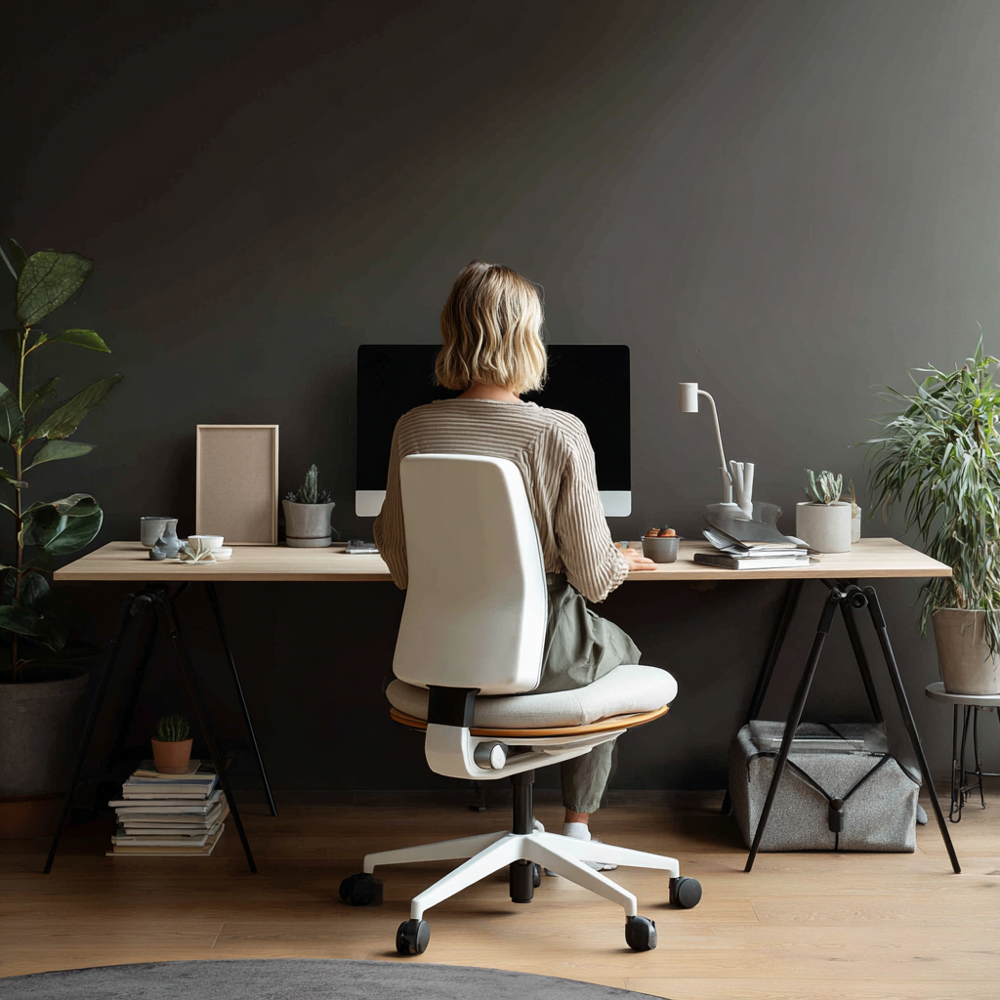
Building a Better Home Office: Ergonomic Upgrades for Comfort and Focus
As remote and hybrid work become more common, many people are spending hours each day in workspaces that were never designed for prolonged sitting.
Dining chairs, soft seating, and basic office chairs may feel manageable at first—but over time, they often lead to subtle misalignments that place increasing strain on the back, neck, and shoulders.
What starts as mild discomfort can gradually affect both physical well-being and focus throughout the day.
The good news is that improving your setup doesn’t require a complete overhaul.
In most cases, a few targeted adjustments can significantly improve comfort, posture, and overall work performance.
Simple Ergonomic Adjustments for a Healthier Workspace
Elevate Your Seating Support
Your seating foundation has the greatest impact on posture.
An ergonomic seat cushion is one of the most effective ways to improve alignment and reduce fatigue—especially when using chairs that lack proper support.
It helps:
- Maintain the natural curve of the spine
- Support the pelvis in a stable position
- Reduce pressure on the lower back and sciatic region
For most setups, this is the simplest and most immediate upgrade you can make.
Align Your Visual Field
Position your monitor so your eyes meet the top third of the screen.
This helps prevent forward head posture, which commonly leads to neck and shoulder tension.
Ground Your Posture
Keep your feet flat on the floor—or use a footrest if needed.
This stabilizes your lower body and supports better weight distribution through the hips and spine.
Incorporate Movement
Even with a well-designed setup, staying in one position for too long leads to fatigue.
Stand, stretch, or move briefly every hour to support circulation and prevent stiffness.
From Ordinary to Ergonomic
The Serenform Summit Seat Cushion is designed to improve the part of your workspace that matters most—how your body is supported while sitting.
Its contoured design and high-resilience foam help stabilize the pelvis, maintain spinal alignment, and reduce pressure during long work sessions.
Because it adapts to a wide range of chairs, it’s one of the simplest ways to transform an existing setup into a more supportive and comfortable workspace—without replacing your chair.
Over time, this kind of support makes it easier to maintain posture, reduce fatigue, and stay focused throughout the day.

Expert Tips: How to Sit Smarter and Prevent Pain Daily
An ergonomic seat cushion provides the foundation for better posture—but how you sit throughout the day plays an equally important role.
Even with the right support, small habits determine whether your posture stays aligned or gradually breaks down.
When combined, proper support and consistent movement are what make sitting more comfortable and sustainable.
1. Maintain a 90° Lower Body Position
Keep your hips and knees at roughly 90 degrees while seated.
This position helps stabilize the pelvis and reduce strain on the lower back. If needed, use a footrest or adjust your chair height so your feet remain flat and supported.
2. Slightly Recline to Reduce Pressure
Sitting fully upright for long periods can increase spinal pressure.
A slight recline (around 100–110 degrees) helps maintain the natural curve of the spine and reduces stress on the lower back—especially when your seat is properly supported.
3. Introduce Small, Regular Movements
Remaining completely still leads to muscle fatigue and stiffness.
Shift your weight, adjust your position, or make small posture resets every 30–45 minutes to keep circulation active and reduce tension buildup.
4. Take Short Movement Breaks
No sitting position is sustainable indefinitely.
Stand, stretch, or walk briefly every hour to reset your posture and relieve pressure on your spine and joints.
5. Use a Cushion That Maintains Support
Not all cushions provide the same level of support over time.
If a cushion is too soft, it can allow your pelvis to sink and your posture to collapse. If it’s too firm, it may create pressure points and discomfort.
A well-balanced design—like the Serenform Summit Seat Cushion—helps maintain proper alignment while still providing pressure relief, making it easier to sustain good posture throughout the day.
Ergonomics as a Daily Habit
Good posture isn’t about holding a perfect position.
It’s about creating conditions that make proper alignment easier to maintain.
When your seating is properly supported and your habits reinforce movement and balance, your body requires less effort to stay aligned—and discomfort is less likely to build over time.
By combining small adjustments with the right support, you create a sitting environment that feels more stable, comfortable, and sustainable throughout the day.

Redefine How You Sit
Most office chairs are designed for function—not for how the body is meant to sit over long periods.
That’s why even with good intentions, discomfort often builds throughout the day.
The good news is that improving how you sit doesn’t require replacing your entire setup. In many cases, the biggest difference comes from improving how your body is supported.
The Serenform Summit Seat Cushion is designed to do exactly that.
With its high-resilience foam and contoured shape, it helps stabilize your sitting position, redistribute pressure, and support proper alignment—turning almost any chair into a more supportive, comfortable place to work.
By reducing pressure on the hips and tailbone, it helps relieve strain on the lower back and sciatic nerve—two of the most common sources of discomfort during prolonged sitting.
More importantly, it helps your body stay in a position that feels natural and sustainable, rather than something you have to constantly correct.
This is what makes the difference between temporary comfort and lasting relief.
When your body is properly supported:
- Posture becomes easier to maintain
- Pressure is distributed more evenly
- Fatigue builds more slowly throughout the day
And over time, that leads to better focus, improved comfort, and a more productive work experience.
Improving how you sit isn’t about making drastic changes.
It’s about making the right change—one that supports your body every time you sit down.
Because when your foundation is properly supported,
everything above it works better.